Beta decay

Beta decay

Friday, 1 April 2011

A tour of Xbox Live and Kinect

This spring, I was invited to Microsoft’s London office for a “tour of Xbox live and Kinect”, the Microsoft Xbox’s online environment and record-setting controllerless peripheral respectively. I personally didn’t know what to expect from a tour of a virtual space but I must say I was surprised to see what Xbox live had to offer in conjunction with Kinect.

I was first introduced to Tanya who represented the Xbox Live system here in the UK and Andy who was a product demonstrator (what an awesome gig). They asked me a series of questions to gauge my familiarity with Xbox live and digital entertainment. “So do you know what Xbox is?” I answered proudly with a hint of embarrassment “Yup. I’m a gold subscriber”, which brought about brief stunned expressions with slight smirks. I needed to establish quickly that I was super familiar with many things Xbox as I was wondering what new info I could get from this encounter. What is there to offer and why am I invited here if there’s nothing new?

Andy then briefly asked “So are you aware of the Kinect?” And again to scroll ahead to fresh material I responded with the collective force of the internet behind me describing the Kinect platform’s recent record breaking sales as well as how the development of the Kinect came about from an issue of WIRED from the previous year. I suppose a simple “yes” could have done...

Down to business then, I was given a super quick demonstration of the hand controls and voice controls of the Kinect very similar to the 2010 E3 Kinect demo. I decided to bring up a few tough issues which I knew were prevalent with the Kinect. For instance when asked to try the voice controls myself, I asked whether the Kinect would recognise my voice in particular or everyone’s indiscriminately. This is a particular issue that could arise from squabbling users who want to do different things with the Kinect. For instance instead of fighting over a remote, siblings would be shouting at the Xbox to play different things. Was there a solution to this? Unfortunately no and it is one of those things which will be smoothened over in what will obviously be a future iteration of Kinect. A few other challenging questions were dropped for instance “why Microsoft Points?” and “will the Kinect recognise twins from each other?” Unfortunately both were tenuously answered.

After having my fun of grilling the demonstrators (who I must say were super nice and super cool people, I was just being cruel). The beauty of the Kinect really shone through. The video communication environment, the party system and the overall social application of Kinect is at a different level to anything else on the market right now. I was demoed to video calling and while video calling has been around for ages, it’s never been quite as streamlined as it is with the Kinect system where you just plug in a piece of hardware and go. With PCs it’s all about installation of various software and if you don’t then trying to find how to get your webcam, microphone and firewall all to work harmoniously.

On top of all that there’s the social appeal to the immediate physical environment. The Kinect platform IS a lot of fun and with friends it can be an awesome tool to make the living room a bit livelier. I mentioned how the Kinect is essentially one of the first steps into making the “Tony Stark garage” from Iron Man a reality and how it could one day link up to the room and control lighting and the blinds after all it can already control what you watch and what you listen to! The demonstrators jested about how I should get a job in their creative team but seriously, that would’ve been awesome! (If you’re reading this Andy/Tanya, then get me that job!)

Through the entire “tour” I eventually discovered something very important about the Kinect. It really is a social apparatus where people separated by distance can come together and interact with one another. This would be amazing for those who are homebound or working abroad. The video calling function from the Kinect can connect to other devices out there and help people keep in touch with loved ones.

After the conclusion of the demonstration I was convinced that Microsoft had demonstrated that they were still a powerhouse of research and technology and the introduction of those discoveries into our homes re-establishes once again the influence that company has on bringing new things into our lives. I couldn’t help but leave without dropping one final challenging question “With so many Kinect’s sold, why is there still such a limited library of games?” I got a surprising piece of advice from this question “Look out for us at this year’s E3.”

Friday, 25 March 2011

The Digital Experience Unleashed & In The Wild

Recently (within an hour of waking up this morning) I bought myself a new iPhone 4 on the 3 network. On The One Plan, I get unlimited data usage which was a good move in hindsight as after 9 hours of owning it, I'd breached the 1.0 GB mark, the upper-end of typical premium data packages. Along with the glorious benefits of having Spotify Premium, Twitter on the go and being able to navigate myself with Google Maps, I also get access to Facebook wherever I am and thus effective use of Facebook Places.

Before taking my internet with me outside my flat, I would plan out my route and take a mental snapshot of a map to where I need to go. Along with a bit of trial and error, investigation and sometimes luck, I'd eventually arrive at my destination give or take 15 minutes depending on how lost I got. With Google Maps available and keeping a tab on where I am, I can confidently - with accurate live information - know which roads I need to go down and which turns to make. Altogether though the internet guided journey turned out to be a far more secluded experience than I expected.

A colleague at work brought up in conversation that everyone was turning into drones with headphones plugged in, zoning out from the wonders of the lush world around them. The overall effect is that it would remove people from the world they were walking in and detract them from physical social interaction. As in talking to each other on the tube, greeting each other in the morning and bursting into song J. R. R. Tolkein style. It's quite prominent in an urban environment where the norm is to leave as small of an imprint on others out of fear from being labeled "weird", I held that she was a bit loony and had this fairytale ideal that everyone was a member of The Lollipop Guild. I must (rather should) make a slight retraction. Walking around I definitely didn't "look around" as much. I didn't experience the beauty of the buildings and the world around me, I was a bit stuck into this portal of information at my fingertips completely taking my surroundings for granted. I wasn't going to open a delightful conversation about the nice weather we've been having with a passer-by, but I did feel that the world was smaller. Overall it felt as if the value of the journey itself, was diminished and it became much more of a means to an end. On the flipside however, with the use of mobile internet and online social networking; I do feel as if there's the potential for sharing a social aspect to my secluded walk.

Facebook Places allows for you to be able to "check in" to various locations. It'll post on your profile where you are, what you're doing and who you're with and if you want to, you can also attach a photo as well (obviously because pics or it didn't happen). Where was the value in this I wondered? Of course there's the bragging. Say you're with someone popular, you'd then of course be popular by proxy. Afterall everyone wants to brag about how because they were near Jimmy Page, they too deserve some of the respect of a rock legend (as if).

Of course the greatest value I think there is, is of course in the sharing with your friends. This provides an avenue of validation for your activities and see what reactions that we'll get from our friends. This makes going out and sharing your activities a learning experience by receiving feedback. And of course you may gain a slight moral justification in that you've been "operating" on transparency, albeit a selective one.

What we've learnt from the success of social networks (and the internet as a whole) is that everyone loves information. But how do you differentiate between what's useful and what's not? Whose opinions do you trust? You of course have a level of trust with your friends. If your friends like something then you might like something. Even if you know that your friend has a crap taste in - let's say films - then at least you'll have a base line to work off. With Facebook Places you can now provide information with what you do, where and then receive feedback/validation. You could do that all before but Facebook Places now adds a certain dash of authenticity, in an environment where anyone can say anything they want.

The downsides? Well of course there's the reduced privacy and you may get some unwanted attention. I personally don't see that as a gargantuan problem mainly because it's an optional feature. Aesthetically it could do with refining too as it seems very blase to have your entire Facebook wall to be filled with photos of where you've been. It'd be nice to have a single "album" or "tour" for people to flick through instead.

On the plus side though, there are many practical benefits to be seen from Facebook places. It of course answers the continual crossroads situation of tracking someone on the move. "I'll call you to find out where you are". Now with Facebook Places and remote internet access you can actually track your friend like an urban ranger. It also of course promotes talking points. Say you were at an interesting location at a particular time or even if it's not that intersting, I'm sure at one point the poster thought it was worthy to point up so there's bound to be a subject of conversation to be found.

Personally I think features which promote the expansion of the internet away from the power socket and onto roads, parks and on the move is a fantastic idea. As an optional feature to help tie friends together, I think it's a step in the right direction. We should always be cautious about what information we put out there though of course. Maybe some friends will have issues with being tagged at being at Marble Arch when they're meant to be at another friends birthday soiree. As much as a step in the right direction it is, it's still a new dimension of social interaction and not everyone is quite as accustomed to it as others.

I'm very much looking forward to further using Facebook Places and mobile internet especially on the golf course to let my friends keep track of the pummeling I deliver to my opponents, hole-by-hole!

Monday, 14 March 2011

Submarine Review

Submarine (15 certificate)
97 mins - Comedy, Drama - Released 18.03.11
Starring: Craig Roberts, Yasmin Paige, Noah Taylor, Sally Hawkins
Director: Richard Ayoade

As we get to our teens - especially our late teens - we all begin to think we are far more mature than our years dictate. The problem is that from the outside looking in, everyone still considers you an adolescent with no grounding on how the world actually works. Submarine is the coming of age story of Oliver Tate’s 16th year in the world and considers himself to be the only sane person in a crazy world. The only difference is that in Oliver Tate’s world, this just might be true.

Submarine is a comedy-drama where the disjointed world of Oliver Tate’s (Craig Roberts) fictitious perspective of the world clashes with those of reality with hilarious outcomes. Beginning with the breakout of his unpopular school image and the wooing of his paramour Jordana (Yasmin Page) and progressing through to the serious subjects of having an estranged family, Submarine dabbles in the fantasy world that all kids share, one of grandeur and romance.


Oliver narrates throughout the entire plot passing witty and fantastical comments about his surroundings as if everything he notices is of a critical importance. Such topics of thought include the moving in of ‘ninjas’ next door and how a frequently bullied girl should follow his manifesto to become popular. These mini-adventures allow for the effortless setup of jokes and the delivery of elegant punchlines which turns Oliver from an awkward kid into a lovable duffle-coated spell-caster who’s able to win us over with uncomfortable laughs.

The rest of the cast deliver an equally as outstanding performance with Oliver’s duffle-coated partner in crime Jordana played by Yasmin Paige who portrays a thick - albeit slightly dry - skinned pyromaniac. Oliver’s parents Lloyd (Noah Taylor) and Jill (Sally Hawkins) bring ladles of deadpan humour as the slightly depressed Lloyd has to compete with ‘life-coach slash prophet slash ninja’ Graham (Paddy Considine). The bond between Oliver and his father is one that evolves and creates a strikingly heartfelt pathos throughout the film.


The combination of executive producer Ben Stiller and director Richard Ayoade made me quite wary of a film supervised by comedy acts, fearful that there would be no reprieve from a cache of jokes that would become overwhelming and subvert the storyline. I was wholly relieved to find my preconceptions defied as the plot and the jokes weaved into it make for a truly well crafted piece of British comedy. Never heavy handed, Ayoade has managed to lace humour in every corner with explosions of uncomfortable humour that will bring laughs and wide grins to every patron at the cinema. With this film nothing is left to waste and every moment is allowed time to fully mature and be savoured. I personally cannot wait until Ayoade’s next venture into feature film directing.


The cinematography in this film is special especially as it’s a comedy and not an exercise in capturing beauty. It’s so pronounced and beautiful that at times you can’t help but feel lost in the romance of what really is a very bleak and frigid setting. A shot of Oliver and Jordana running with fireworks is one that becomes replay-able as one of the more innocent scenes ever witnessed in film.

Overall Submarine is a tremendous film which has a thin veneer of hollowness when it in-fact has oodles of enjoyment and substance beneath. It truly is one of the best British comedy films made and I wouldn’t be surprised if it becomes a yard stick for future British indie comedies. Without a doubt worth seeing, it can be enjoyed at anytime and especially with a friend to discuss the complexity of the scenes after leaving the theatres.

Wednesday, 2 March 2011

Review: True Grit

True Grit (15 Certificate)
110 mins - Drama, Western - Released 11.02.11
Starring: Jeff Bridges, Matt Damon, Hailee Steinfeld
Director: Ethan Coen, Joel Coen, Scott Rudin, Josh Brolin

With their 15th entry to the silver screen, the Coen Brothers are looking to secure the top spot in the UK box office with True Grit!

True Grit will be the second film adaptation of the 1968 Charles Portis novel of the same name. The first adaptation in 1969 starred John Wayne, which he received an Academy Award for Best Actor as a result of his performance. The Coen Brothers are looking to beat their predecessor in their first outing into the American Western genre. The genre has gathered dust since the height of it’s glory days around the time of The Good, The Bad, The Ugly. Although there have been entries into the genre since, none have quite captured the classic tones of adventure, quest, wilderness and survival of the Wild West like stalwarts of the genre. That is until now.

The story of True Grit revolves around Mattie Ross (Hailee Steinfeld), a 14 year-old girl with a head-strong determination to avenge her father’s death at the hands of the coward, Tom Chaney (Josh Brolin). Fully aware that her capabilities are limited at the age of 14, Mattie Ross enlists the help of a U.S. Marshall, however she doesn’t sway the help of the best U.S. Marshall nor the most knowledgeable for the task. She pursues the one which is the most ruthless, the one who is known to possess “True Grit”, U.S. Marshall Reuben “Rooster” Cogburn (Jeff Bridges). Along the way they are teamed up with Texas Ranger LaBouef (Matt Damon) who is also after Chaney but for his own reasons.

LaBouef (Matt Damon)

The trio set off after Chaney into the Indian territories where they face not only a criminal but the wilderness and the unknown. Here True Grit really sets itself apart and the essence of the Wild West is captured in all it’s glory and savagery. All the decisions made have to be thought through and complacency can become fatal. Even an essential daily act such as sleeping needs to be considered. For instance the size of a flame and setting up camp could attract the attention of marauders or nature’s deadly predators.

Roger Deakins' cinematography does a faultless job of capturing the visual spectacle of the wilderness. As dangerous as it is, the wilds are stunning and vast. Obviously compared to the 1969 adaptation, the Coen Brothers version of True Grit will have a number of advantages in terms of cinematography, however the area which seals the deal, is the night time filming. Dark enough to blanket the terrain, while illuminating enough to identify the characters, True Grit plays on the primal fear of darkness and the unknown in such a way that will turn the audience back into cautious kids. While the trio’s pace slows down at night, the action never bogs down.

The dialogue remains sharp and witty through the whole journey, however viewers should be warned to keep a sharp ear and focus as some of the speech is heavily laced with mannerisms and quirks which contemporary viewers may be unaccustomed to. True Grit should certainly not be watched when drowsy as the comedy is selective to the viewer that pays attention. one liners are limited to classics while most of the witty dialogue is like a track of dominoes, punch lines are triggered after a careful setup. Thankfully, the cast is able to execute the accents flawlessly while keeping them accessible to a modern audience so dialogue becomes a far from gruelling task.

Bridges’ performance is nothing surprising for an actor of his calibre. It’s strong and delightfully witty as his portrayal of Rooster Cogburn is one of a lawman who has seen many winters in his life. Quintessentially American, Rooster only pursues ventures in his best interests. Rumoured to ruthlessly kill his mark as opposed to capture, as a simple kill presents a safer although less honour-bound option. That being said, he is not without honour. Rooster does follow his own moral code which does at times come in conflict with the one laid down by the law but his code of conduct does keeps his character as a force of good.

As Matt Damon’s résumé builds, he becomes a much more seasoned actor and his performance as LaBoeuf is a testament to his growing experience. A chatty lawman, LaBouef continually boasts of the abilities of ‘the’ Texas Rangers however a dash of insecurity is mixed in which makes Matt Damon’s skill-set perfect for the role of LaBeouf, another deep portrayal of a character who is capable yet insecure.

The true spotlight does go to Hollywood newcomer Hailee Steinfeld in her role as Mattie Ross. It’s difficult to think of anyone else that could have executed such a complex yet innocent character. A clever young lady, Mattie is able to match words against those at least three times her age and impressively bend them towards her will while fully aware of her own strengths and weaknesses.

Mattie Ross (Hailee Steinfeld)

This power-cast of heroes handle themselves with gusto in the American wilderness as they happen upon strange and hostile encounters. This all makes the pursuit of Tom Chaney more than one of a manhunt and rather one of a full bona fide Western.

With a full thrust into the Western genre, the Coen Brothers have received a BAFTA for Best Cinematography as well as 7 other nominations and is nominated for a staggering 10 Academy Awards for Best Picture, Director, Adapted Screenplay, Actor (Bridges), Supporting Actress (Steinfeld), Art Direction, Costume Design, Sound Mixing and Sound Editing.

True Grit is a lock for one of the must-see films this February.


Monday, 21 February 2011

MyVillage Articles

So I haven't been able to find time to keep up with the blog due to work so to keep track of what I've done, here's a list of all the articles of done so far for MyVillage.

http://london.myvillage.com/article/despicable-me-minion-madness-in-london - Edited
http://london.myvillage.com/place/foundation-bar-london - Edited
http://london.myvillage.com/article/flux-by-alessandro-botto - Edited
http://norwich.myvillage.com/article/search-for-a-norwich-dance-star - Edited
http://london.myvillage.com/article/valentines-porridge-recipes - Edited
http://london.myvillage.com/article/propaganda-fridays-at-the-o2-academy-islington - Written
http://london.myvillage.com/place/imli-soho-london - Written
http://london.myvillage.com/place/cigalon-london - Written
http://london.myvillage.com/article/carmen-3d-review -Written
http://london.myvillage.com/article/true-grit-review - Written
http://london.myvillage.com/article/valentines-day-films - Edited/Written
http://london.myvillage.com/article/chinese-new-year-a-quick-food-guide - Edited
http://london.myvillage.com/article/an-evening-at-the-mynottinghill-awards-2011 - Written
http://london.myvillage.com/article/chinese-new-year-traditions-and-celebrations - Written/Edited
http://london.myvillage.com/article/film-in-february - Written
http://london.myvillage.com/article/cabaret-dining-in-london - Written
http://london.myvillage.com/article/sanctum-review - Edited
http://london.myvillage.com/article/the-michelin-guide-2011 - Written
http://london.myvillage.com/place/the-edinboro-castle-primrosehill-london - Written
http://london.myvillage.com/article/heston-blumenthal-under-the-microscope - Written
http://london.myvillage.com/article/natalie-portman-under-the-microscope - Written (Personal favourite)
http://london.myvillage.com/article/londons-best-italian-restaurants - Written
http://london.myvillage.com/article/the-restauarant-at-the-royal-academy-of-arts - Written
http://london.myvillage.com/article/january-in-film - Written
http://london.myvillage.com/article/film-reviews-for-january - Written
http://london.myvillage.com/article/digital-dining-at-inamo-St-James - Written
http://london.myvillage.com/article/the-fighter-review - Written
http://london.myvillage.com/article/must-see-new-theatre-in-london - Written
http://london.myvillage.com/article/127-hours-review - Written

Thursday, 6 January 2011

Review: 127 Hours

The true story of the life defining experience of Aron Ralston based on his appropriately named memoir “Between a rock and a hard place.” is one of mental fortitude and toughness not only for Ralstom (James Franco) but also for the viewer.

This film focuses on the experiences of Aron Ralston who in 2003 went hiking in the remote Canyonlands National Park to find himself pinned hopelessly beneath a boulder with no hope of rescue and scarce rations to survive. Ralstom a resourceful, energetic and adventurous individual is left isolated with little else to do than to face his own death.

Director Danny Boyle does an unparalleled job of being able to draw a viewer into the trauma of a 5 daylong struggle against not only nature but Ralstom’s own mind. As if trapped in a canyon they, the viewer has only the briefest of reprieves from the desperate scene in front of them.

The film’s only true character is Aron Ralsto played by James Franco. He serves as the films hero, villain, joker and narrator. In a Q&A, Danny Boyle stated that “You don’t see Aron Ralston, you see James Franco going through Aron Ralston’s experience.” And Franco’s outstanding performance is definitely worth seeing.

He enters the film as an adventure junkie, drawing adrenaline from nature, which he continues to challenge whether it’s traversing a canyon, racing across treacherous terrain at daring speeds or trying to shift an immovable boulder. His ultimate battle though however is when his fortress of physical ability and mental toughness is slowly dismantled by nature as in every instance where the eventual delirium wears off or a hallucination fades; Ralstom wakes up only to his nightmare.

Through the whole film you realise that the character of Ralstom isn’t alone throughout this ordeal, he is instead joined by allies and enemies within his own mind, those of a man who has turned his back on the bustling urban crowds and humanity. He’s able to relay his ordeal to his loved ones through his video camera which acts as a portal to the civilization he has abandoned. During his time in the canyon, Ralstom’s superhuman physicality and independence is eroded away and he progresses to become a man once again, realising his reliance on those he loves and has left behind.

The cinematography throughout the film is remarkable; the connection between the camera and the subject is hauntingly in sync. Working in such confined spaces, presents its obvious challenges however directors of photography Anthony Dod Mantle and Enrique Chediak, overcome these obstacles with brilliant innovation and place you with front row seats to witness Ralstom and his plight.

The score to the movie keeps this high bar hitting spectacle in place constantly as both original music and licensed music is positioned perfectly to portray desperate, bleak and surreal situations. Boyle draws songs from the collective libraries which we all have, to tremendous affect, in particular Bill Wither’s “Lovely Day” which is applied with great irony.

A viewer’s psyche will be taxed throughout which only nurses the empathy that one has to the subject, one which evolves into a genuine sense of respect for the person that James Franco portrays and for that, the viewer is rewarded with an incredibly powerful piece of cinema.

Not everyone will be trapped in a canyon pinned by a boulder however at some point in everyone’s lives; people will be able to relate to the adversity of facing an impossible situation and 127 hours will tug on those emotions evoked from such a scenario.

This review can also be found at MyVillage

Tuesday, 4 January 2011

The Social Network Review

In July 2009, the script for The Social Network was leaked on the internet. Critics were puzzled with who would be interested in a film about a website, especially one which has a relatively small amount of controversy and with little to no input by any of the real life principals. Regardless of the source information, as a film The Social Network has gone on to receive critical acclaim. I personally didn’t watch any of the trailers nor did I register it as one of my must see films, however the opportunity to watch it came up recently so I decided to see what the buzz was about.

The story revolves around the life of Mark Zuckerberg when he created Facebook from a dorm room in Harvard and how he and others developed it, to become what we all know today.

Jesse Eisenberg takes on the role of Mark Zuckerberg and delivers a fantastic performance of a geeky sociopath. While reserved the majority of the time, his brief outbursts of social interaction are strong, confident and clever. Eisenberg’s performance dominates the scene every time he walks into a room and even when he leaves one. Throughout the film though, the character of Mark Zuckerberg is continually under attack by the Winklevoss twins (both played by Armie Stammer), Divya Narenda (Max Minghella) and Zuckerberg’s then best friend Eduardo Saverin (Andrew Garfield).

The performances by all the aforementioned actors are outstanding, in particular Armie Stammer’s. The ability to deliver not one but two strong and memorable roles each with a unique personality is a feat which is rarely accomplished although recent memory does remind me of Jeff Bridges’ performance in Tron: Legacy. Not a bad name to be mentioned with in a conversation.

The soundtrack for The Social Network is something special indeed. Composed by Trent Reznor and Atticus Ross, The Social Network soundtrack ranges from hauntingly beautiful to pulsingly hypnotic to grandiose and overwhelming. Each song suits its scene perfectly. The soundtrack draws you into the rollercoaster world which is being told while still registering as a standalone piece of brilliance. Of note is “In the Hall of the Mountain King” written by the 18th century Norwegian composer Edvard Grieg. Reznor and Ross put a slight electronic twist to it that allows it to stand alone in a scene where all other audio is muted. And it works.

The storyline is both The Social Network’s strongest forte as well as its primary source of controversy. As a film, the story is fantastic, gripping and is told in a way which keeps the viewer constantly engrossed, constantly focused in and soaking up all the information that is dispensed. Nothing in the film seems to be put in for no reason whatsoever and every scene is delivered with brilliant dialogue and impact, while at the same time not being too overwhelming. The audience doesn’t need to know all the computer whiz techno-jargon or in-jokes however it all is still appreciated. The Social Network is not about the site itself but is first and foremost a story of relationships and how they’re affected by business.

At the same time, it should be noted that the big controversy that surrounds The Social Network is around the accuracy of the story. The screenwriter Aaron Sorkin stated that “I don’t want my fidelity to be to the truth; I want it to be to storytelling. What is the big deal about accuracy purely for accuracy’s sake, and can we not have the true be the enemy of the good?”

Much of the screenplay is fictionalised and it is definitely a dramatization of history. While the names are the same, the characters do not portray their real life personas whatsoever. The underlying story arc in The Social Network is of the relationship between Mark Zuckerberg and his ex-girlfriend Erica Albright and how Facebook was a way for him to prove himself. Whether this was the case or not, no one truly knows however much of the film is based on these loose rumours turned fact. Ultimately The Social Network is not a documentary. If you wish to find out who Mark Zuckerberg actually is, then The Social Network is not essential viewing.

Leaving the cinema I had a conversation with a friend about who our favourite characters was and the answers were definitely polarised. There’s something special to be said about a story where everyone can find a hero in it but they won’t necessarily be the same character. It gets you to ask questions and keeps you in the dramatised world even after leaving the cinema. It is a fantastic process to experience, one that unfortunately not enough films impart on viewers.

For a great story, strong acting and an all around well delivered film. The Social Network definitely delivers on that part. However don’t go in expecting a documentary on the life and story of Mark Zuckerberg and the genesis of Facebook.

Thursday, 30 December 2010

My computer’s health diet

For technophiles like myself, the most persistent obstacle we face is the turnover of technology. Innovation is a predator and its prey is whatever the current standard is. Like a resilient case of Herpes, the turnover of technology is a problem that technophiles face that will lie dormant biding its time and then one day it will reveal itself and greet you like a familiar foe. Technology that was cutting edge will become obsolete and I find it most apparent when it comes to my own PC.

My desktop has been through countless upgrades; program purges, defrags and reformats so that its capabilities will always be able to accommodate my ever growing needs. Needs which increase in hunger as something new pops along which requires a more stable, more powerful platform. The way in which I care for the performance of my desktop is something I’m quite proud of.

In contrast many of my friends, have an innumerate number of problems which plagues the health of their computers and it pains me every time whenever I have to borrow a friend’s laptop, that I’ll have to slay waves of pop ups that’ll rudely nudge you to schedule in some tender loving care for the computer.

Whether it’s a reminder to update a piece of software which has never been utilised in the life of the computer, a request to backup all of a computer’s memory to Iomega ZIP disks (yes this has happened) or a prompt to update a piece of spyware disguised as anti-malware. The vast majority of these issues I encounter on one off occasions and issues which my friends have to face every day are completely avoidable.

So while jotting down the list of my most valuable applications that protect my computer from these problems, I also felt inclined to include my favourite applications even if they were recreational because I feel that maximizing the capabilities of what a system can do, is just as important to the life of a computer as staving off its obsoletion. What I love most about the list I wrote down? All the programs are free!

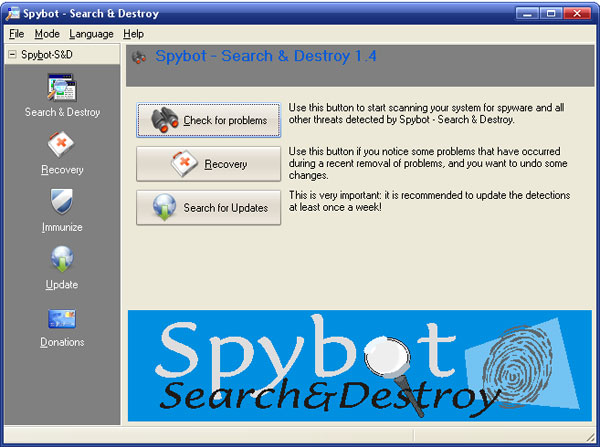
Spybot S&D

The greatest fear that users have for their computers is malicious software getting onto their systems, messing everything up and causing havoc. A program which hogs up all the resources of a system or prevents it from performing desired functions will just evoke a reaction of doom and gloom. It’s why anti-malware software is deemed and agreed upon as essential for any system. The big problem though is that most commercial anti-malware software is based on a subscription model and not everyone has the luxury to dole out cash every year to keep a subscription running where you don’t witness the results. Without an improvement to your system, users aren’t even sure if the antivirus software is even necessary and then that’s where the repeated pop-ups come up that remind you that your computer is vulnerable to a sea of malicious bugs which will end the world unless you break out your wallet and hand over your money.

Well here’s my solution, Spybot Search & Destroy. A free, popular spyware and adware removal program with a badass name that runs on Windows. Ever since I installed it, I have never had unwanted programs appear that try to trick me into installing more fake programs that will cannibalise all of my information or programs that appear that I never recalled installing. This is the first application which I install on any new and clean system. I keep a setup file on my backups as obviously to get at it I need to access the internet however without a direct address to the site (and even then), my computer will already be vulnerable.

The only downside is that it slightly encumbers the resources on your system and that now and then it will prompt you any time a program tries to alter your computer’s registry file which includes whenever you intentionally want to install a program. This is however a rare issue and a petty one at that. Also the program’s footprint is far smaller than any of the other anti-virus programs I’ve used and the alternative to run a naked computer on the internet would be far more problematic.

Spybot S&D GB-EN site:

http://www.safer-networking.org/en/index.html

Also see: Trend Micro’s “HouseCall” site, a browser based anti-malware scanner.

http://housecall.trendmicro.com/uk/

WinDirStat

Anyone who’s run out of hard disk drive space will encounter the problem of trying to locate where their most bloated files are. Window’s own capabilities to locate the big boned files and folders; I find are woefully inadequate. WinDirStat provides an elegant solution. It will in a relatively short space of time scan through a targeted directory and provide you with information of where and what proportion of your disk space is being occupied.

Armed with these statistics, you’ll be all the better informed of where and what to get rid of and before long your hard drive will be a lean, mean, memory storing machine.

WinDirStat site:

http://windirstat.info/

Firefox

Firefox isn’t new and I’m sure many people reading this blog will be reading it using a Firefox browser. The great thing about Firefox which I love the most though is the wide variety of add-ons. To be honest I don’t see much difference in function between Firefox, Safari, Internet Explorer and Google Chrome. None of them are handicapped in their capabilities compared to the others and to me they’re all equally as useful. However some were made more equal than others and for me that’s where Firefox stands out. It’s the community add-ons which you can incorporate from skins, to toolbars, video players and little scripts. All of a sudden your browser can be customized to become your browser. On mine I have the ‘NASA Night Launch theme’, various video player plug-ins, the invaluable BlockSite and probably my recent favourite add-on, Flashblock which replaces Flash objects with a button which you click on if you want to view them. This severely saves on system resources and prevents a lot of annoying adverts.

Treat yourself a bit, go check out what add-ons you can put to your browser to make internet browsing that little bit more fun.

Firefox:

www.mozilla.com

Firefox Add-on site:

https://addons.mozilla.org/en-US/firefox/

Rainmeter

A brilliant hybrid of practical and recreational, form and function; Rainmeter is a desktop customization platform. This is a lot different from changing the theme of your Windows. Rainmeter changes your static desktop into a hub of interactivity and a brilliant facet of Rainmeter is the numerous gadgets (skins) you can compile together.

Rainmeter essentially acts as an interactive overlay for your desktop. On mine I have a large skin which displays the date and time on my desktop as well as numerous little tools which include information on my network traffic, how much of my computer’s resources are being used and quick links to some of my most used applications. Everything looks gorgeous, slick and it always impresses people when they see it.

I haven’t personally indulged in everything which Rainmeter has to offer which includes an RSS reader and Twitter feed however I’m sure in the near future I’ll get around to searching for those and educating myself in their use.

Rainmeter isn’t without its flaws though. The bare UI has left much to be desired and you’ll frequently have to navigate a complex Jenga of right-click hover menus and text based settings which can be intimidating. The results when performed correctly however are truly spectacular.

Rainmeter:

http://rainmeter.net/RainCMS/?q=About

Spotify (Free)

While not an essential piece of software; as mentioned in a previous blog post, Spotify truly offers a vast library of music which no single (or chain) of record stores can offer. At your fingertips will be all the music you can consume and barring the occasional advert, it’s all free.

The library at your disposal is not just limited to tracks either. Spotify comes equipped with tons of information about artists. A feature which I find remarkably useful is the “related artists” links when I feel that my appetite in a particular genre of music just isn’t quite sated. You can add that single track you love from an obscure artist to an already comprehensive playlist. And once you’re done you can then share your collage of music with friends on Facebook who can conversely subscribe and have a quick link to your mini-masterpiece. This also performs a fantastic function for when you’re at a friend’s house and you want to listen to your playlist(s).

On more than several occasions I have formulated the perfect concoction of tracks for a particular event such as for a Poker evening or themed party. I couldn’t handle having to queue up tracks on Youtube on request or be limited by the confines of the library which was available on my iPhone which may or may not have had the ideal mood music. Spotify offers a simple and refined solution to both problems.

Spotify:

http://www.spotify.com/uk/

Msconfig.exe

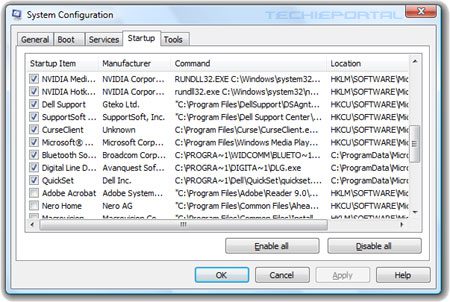
Now unlike the other programs and tools on this list, msconfig.exe is one which every Windows user already has. Do some research on it and you’ll realise that it’s quite a powerful program.

The Microsoft System Configuration Utility (MSCONFIG) is a tool that can help you troubleshoot program related problems with your OS via a small and to the point interface. Although intimidating at a glance, even a fair understanding of MSCONFIG will be able to help you cull those annoying start-up notices you get from various programs and even customise which programs you want to boot-up when you turn on your system. A useful hour or two spent on educating yourself about MSCONFIG has the potential to near enlighten your digital experience when using Windows. Not a bad option when that hour would otherwise be spent wasted watching the X-Factor.*

The downside however is that MSCONFIG is as previously mentioned a powerful tool and when utilised clumsily can cause a whole mess of problems. Many items which you may deem as essential to the everyday running of your computer are perceived as optional by Windows and you might accidently turn off a process or service that is required by your applications to function sooner or later. So do a hint of research on what you should or shouldn’t turn off. It’ll be worth it.

Discovering the existence MSCONFIG has just made the boot-up process remarkably smoother. No more notifications to update oft-unused pieces of software, or intensive programs that run in the background during the whole operation of my computer that I only need to use them for 5 or 10 minutes.

MSConfig Wikipedia page:

http://en.wikipedia.org/wiki/MSConfig

Honourable mention:
Steam

This is a much more niche program when compared to others and is targeted directly towards the gamer inclined demographic, so if you have no interest in PC games, there will be little here of interest.

Steam released by Valve Corporation is a digital distribution platform. It’s a very simple concept which feels incredibly foreign the first time you use it. On Steam you can buy video games however instead of paying for delivery of a disc via good ol’ van and stamp or braving the hostile outdoor environment** to get to a retailer, the Steam client will download the game straight to your computer. Not only that but wherever you log onto the internet and have access to the Steam client, you can download and install your game. Gone are the days of having to keep a disc in your disc tray or carrying around with you books of CDs and DVDs. Now it all comes right through the wire (or air even!).

While the digital distribution aspect of Steam is the meat of the client, the garnishing really tops it all off. Through the Steam platform you become part of a community where you can add each other, befriend fellow gamers both in and out of game, chat with them, invite them to play other games in your mutual libraries or compare stats for bragging rights. User formed communities’ spring up for fans of certain games and forums are provided to really get your nerd on with other fans.

The Steam client also provides you a portal to gaming related news specific to the games that you buy and will automatically patch your games for you. The arduous task of having to navigate the internet for the specific patch for a game with the specific version number is all handled for you by the trusty Steam platform. You don’t need to worry about whether you need to install a series of incremental patches or a big beefy patch or whether whatever it is that you’re downloading is even legitimate!

The crème de la crème of the Steam platform though is the Steam sales. Often the good folks over at Valve Co. will feel generous and just slash games up to 95% off. The prices on Steam adjust itself and games will get cheaper over time just like how they do in a retail store. Currently on Steam is their Winter Sale and for 21 days they’re offering unheard of discounts. If I thought I had a large backlog of games I wanted to get through last month; If only I had known what was to come. The list has now tripled itself in size with all the indie games at bargain prices I got and various publisher packs on offer. This is even with restraint! I could have easily bought 5 times the number of games that I have, I just had to draw a line somewhere. Of all the downsides to have, this is a very nice dilemma to have. To be offered too much for your money.

*Apologies to the creators of X-Factor. I do not mean to slight your obnoxious show in any way.

**Research done on the internet has revealed that The Outdoors contains various dangers which include avalanche, bears (BOTH the Polar and Grizzly variant!), Poisonous Jellyfish and venomous insects. Most alarming of all is that The Outdoors also contains a 1.392 x 10⁶ km wide burning ball of hydrogen which has been known to be the culprit of uncontrolled nuclear fusion reactions causing numerous cases of cancer.

Monday, 20 December 2010

Tron: Legacy Review

Taking a well established cult classic and updating it for a younger generation with matured technology is quite possibly one of the more ambitious tasks for a film director to take on let alone one who’s most acclaimed work was a minute long video game commercial (See: Gears of War – Mad World commercial). Although hiring a video game commercial director for the hotly anticipated Tron sequel could possibly have been the right choice for Disney Digital 3-D.

The video game world is subject to a savage gauntlet of scrutiny by the masses. Clues from trailers and announcements are mercilessly picked apart and from their carcasses critics are prepared to extrapolate and pan a development studio before they’re given a chance to showcase the fruits of their labour. Video games are the new titans of digital entertainment when you consider; the day-one global box office sales of Avatar, $27m when compared to the day-one European and US sales of marquee title Halo: Reach at $200m. A lot rides on the marketing campaign of a blockbuster video game title, so when Joseph Kosinski’s works (Gears of War’s “Mad World” and Halo 3’s “Starry Night” commercials) were not just well received but highly praised by the masses on the internet, Disney took notice and decided to apply his skills to a major-studio special-effects laden film.

As a result, Tron: Legacy looks fantastic. The world of “The Grid” in Tron is about as close as you can get to a video game so Kosinski hasn’t changed his style much and although a risky approach to directing a feature film; you can definitely see the benefits. The aesthetics in the digital world of The Grid is incredibly difficult to describe in words, the world is lush yet Spartan at the same time, vivid yet monotone. Kosinski had to fabricate an entire world to look so unique yet functional as if it had all been designed by a single person. He said “Everything inside Tron world had to be designed. And it had to be built either physically or on computer. Everything from the city plan down to the smallest detail of a lamp post. You can’t just buy stuff off the shelf and put it in the movie. Everything has to be tweaked and built from scratch”. Perhaps that is why when I watched the film; I bought into this digital world immediately. The architecture, the uniforms and the various items all glisten, gloss and pulse with a seductively sleek intimidation.

The movie sounds brilliant as well with a musical score by the electro duo Daft Punk. Rather than be a showcase for an upcoming album, Daft Punk have kept in the forefront of their work that this is a score for a movie. The traditional horns and strings of the movie are thus woven in with synth tracks and punctuated by powerful basslines that make the visual spectacle tingle with life. Daft Punk wield a symphony orchestra like an artist to a brush and in addition to their own digital magic, the duo have been able to form grand overtures to sombre soundscapes to pulse racing tracks which draw you into Tron’s digitally mystical atmosphere.

That is unfortunately where the forte’s of Kosinski’s experience exhausts itself. The dialogue in commercials is extremely limited and their impact when applied to Tron is the same. Most of the dialogue seems to have been crafted with the intention of being a one-liner; however without a thorough body of execution, the sewn together one liners fail to strike with poignancy.

The main character Sam Flynn played by Garett Hedlund is the worst offender to this diatribe. His introduction builds up to have potential however as the movie goes on, I feel more and more willing to lower my standards. Initially he comes across as a hacker whizz with a rebellious robin hood like complex however when he’s thrust to be the hero of a digital world, he is nerd turned meathead. His character refuses to employ wit and cunning which is only made more apparent when in contrast to his support characters.

Jeff Bridges does his best to prop up Hedlund. As star of the original Tron, Bridges reprises his role and delivers a strong performance of a character that has atrophied in recklessness yet gained strength in wisdom and patience. In a role that demands Bridges to play several iterations of himself, Bridges remains a convincingly real anchor in a digital fantasy. On occasion, “The Dude” from “The Big Lebowski” creep in however they do provide a good humorous reprieve from the dark and savage world of The Grid.

The stand out performance in this film however is provided to us by Olivia Wilde. The introduction of her character leads us to believe that she is a stereotypical “badass chick” however the perspective of her character swiftly shifts to one of a mega-geek. In the world of Tron however, being a typical mega-geek is par for the course. Wilde’s character instead finds fascination and fantasy from printed books and stories of sunrises as opposed to computers and the nocturnal. Any time she enters the screen a spark of delight ensues not only because Wilde looks bewilderingly stunning in the Tron aesthetics, but also because she delivers a refreshing character that is quirky and full of substance. Unfortunately her appearances are limited and not nearly enough time is spent developing her character.

The plot is nothing spectacular by any stretch. The premise is set down very quickly and continues in a very straightforward manner that may have come from necessity. A chase scene or CGI panorama ensues most scenes of meaningful dialogue leaving little time to actually form any complex attachment to the storyline. I would have loved to have gotten a heavy dose of the lore and background on the world of Tron however most of the lore had to come extrapolated from the original film and the viral marketing campaign of Tron: Legacy. When watching Tron: Legacy I definitely realised there was a lot more than meets the eye however I think those who haven’t watched the 1982 original may be at a disadvantage as Legacy provides a lot of fan service.

The best bits of Tron: Legacy for me boil down to the best bits from the original. In particular the gladiatorial arena fights were a fantastic highlight. The combat scenes could have easily been twice as long and twice as numerate before they got tiring. Instead much more time is spent on flyover panoramas of The Grid and the set ups for one-liners. There are only so many times when you can press a button to wow the audience until they begin to get jaded and Legacy skirts that barrier far too often.

Unfortunately that is the greatest downfall of Tron: Legacy. The sparks of fantastic ideas fade away far too quickly to have any true substance. Whether it’s a fascinating character, light cycle-based arena combat or the history and lore of The Grid; the portions of the film we’d love to know and see more of are smothered by either incomprehensible or cringingly predictable plot points.

With a bit more work on the characters and a few more editorial passes on the script. Tron: Legacy would have been a film that stood alone on the summit of CGI feature-filming. However its downfalls leave it as a stunningly beautiful, yet deeply flawed blockbuster that is honestly very enjoyable but lacks depth. Similar to a video game commercial.